By Your Name |
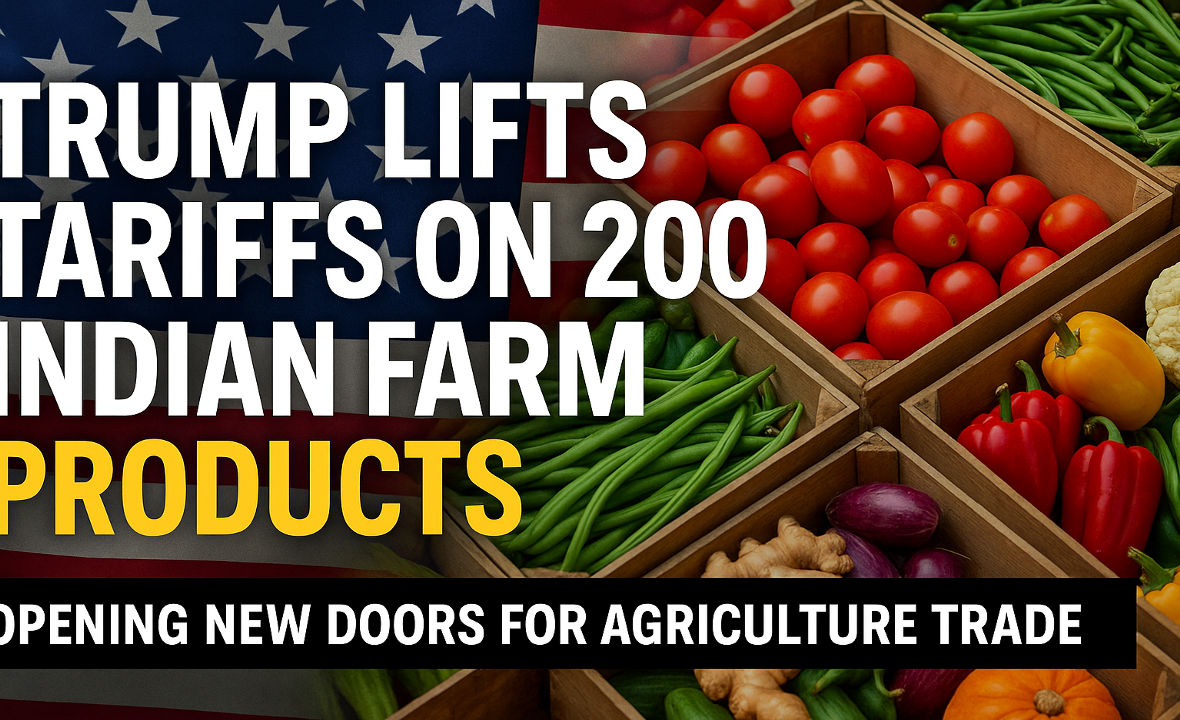
In a move that promises to reshape agricultural trade between the world’s two largest democracies, President Donald Trump has announced the removal of tariffs on roughly 200 Indian farm and food products. The decision is being hailed by exporters and trade groups in India as an important step toward restoring lost market share in the United States and reviving demand that fell after tariffs were imposed.
Immediate benefits for exporters and farmers
The tariff rollback directly improves price competitiveness for a wide range of Indian agricultural goods — from spices and tea to certain processed foods and nuts. For exporters who saw shipments decline when duties made Indian products more expensive for U.S. buyers, the change provides an immediate commercial opening. At the farm level, renewed demand can translate into firmer farm-gate prices and steadier procurement from processors and packers, helping small and medium growers recover revenue lost during the tariff period.
Which products are likely to gain most
Certain categories are poised to see the quickest revival. Spices, long a staple of Indian exports, can regain shelf space in specialty and mainstream U.S. retail channels. Rice and select processed food ingredients, along with horticultural products that meet phytosanitary requirements, are also expected to rebound. Processed snacks, beverage inputs, and some oilseed derivatives could follow as trade relationships are rebuilt and logistics are realigned to handle renewed volumes.
How big is the opportunity?
Trade bodies and industry observers estimate that billions of dollars in export value could be affected by the tariff removal. While headline figures are useful to gauge scale, the true impact will depend on how quickly exporters can convert renewed market access into firm contracts, upgrade packaging and labeling to meet U.S. standards, and scale logistics — especially cold-chain and containerized shipments — where required.
Short-term wins, longer-term work
Although tariff relief is an important short-term win, regaining market share is rarely instantaneous. Importers who shifted to alternative suppliers during the tariff period will not automatically return; Indian exporters must proactively engage U.S. buyers, provide competitive pricing and reliable delivery windows, and demonstrate compliance with food-safety and traceability standards. Investments in quality control, certification, and faster logistics will accelerate recovery.
Logistics, standards and supply-chain readiness
Exporters should seize this policy window to shore up supply-chain capabilities. Strengthening cold-chain links, improving packhouse and processing quality, and ensuring consistent compliance with U.S. phytosanitary and labeling rules will be critical. Buyers increasingly demand traceability, predictable lead times, and seasonal continuity — capabilities that exporters who move quickly can use as a competitive advantage.
Regional impact and rural economies
For many Indian farming regions that depend on export demand, even a partial recovery in shipments can stimulate local economies. Better export orders can reduce inventory pressure, improve cash flow for farmers and processors, and support agricultural service providers such as cold-storage operators and logistics firms. This multiplier effect underscores why export policy shifts matter beyond headline export numbers.
Implications for India–U.S. trade diplomacy
Beyond immediate commercial effects, removing tariffs on agricultural lines sends a positive signal in bilateral trade relations. It can create momentum for broader discussions on standards harmonization, market access in other sectors, and cooperation on agricultural research and investment. The move may also pave the way for negotiations that tackle non-tariff technical barriers and supply-chain resilience — issues of growing importance to both countries.
What exporters should do next
- Reconnect with U.S. buyers: Reach out to distributors and retailers to reopen conversations and renegotiate supply terms.
- Confirm compliance: Ensure all products meet U.S. food-safety, labeling, and packaging standards before shipping.
- Strengthen logistics: Upgrade cold-chain and container capacity where needed and secure reliable freight and inland transport partners.
- Differentiate products: Emphasize quality, organic or geographic-origin credentials where possible to command premium positioning.
- Monitor competition: Keep an eye on alternative exporters and adapt pricing and promotional strategies accordingly.
Bottom line
President Trump’s tariff rollback on 200 Indian farm products offers a meaningful commercial opportunity: a chance to rebuild U.S. demand and strengthen agricultural exports. However, translating policy relief into sustained shipments will require timely action by exporters, targeted investments in standards and logistics, and active buyer outreach. If stakeholders move quickly, this policy change can turn into a durable boost for Indian farmers and exporters — and help deepen India–U.S. agricultural trade ties.
“`0