Politics
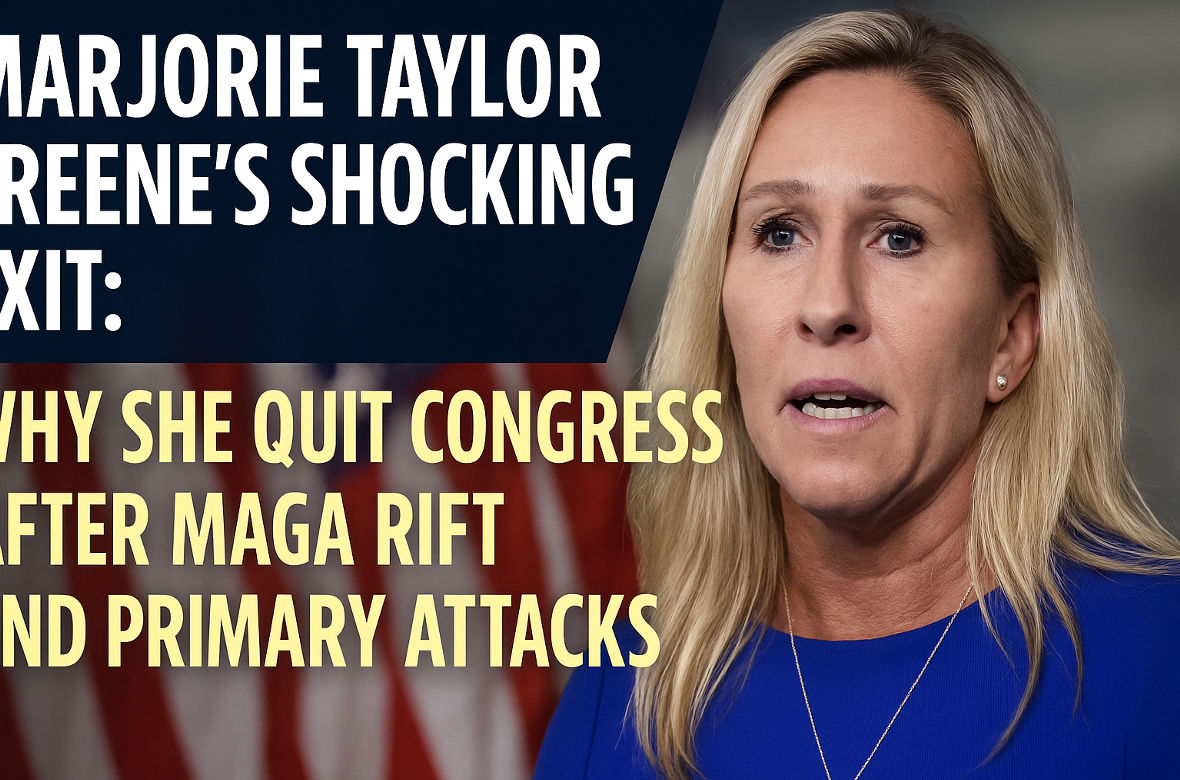
MAGA-aligned congresswoman Marjorie Taylor Greene has long been one of the most vocal and controversial figures in American politics. Her fierce loyalty to Donald Trump, unapologetically hard-right positions, and constant headline-grabbing statements have kept her at the center of national attention. But her unexpected decision to resign from Congress — citing what she described as a “hurtful and hateful primary” ahead — has stunned both allies and critics across the political spectrum.
While Greene has weathered public criticism for years, the internal friction within her own party, especially after she broke with Trump on the release of Epstein-related files, appears to have pushed her toward this dramatic exit. Her resignation marks not just a personal turning point but also a revealing moment about the shifting dynamics within the Republican Party.
Tensions Rise After Greene Defies Trump on Epstein Files
One of the biggest shocks came when Greene — usually aligned with Trump on nearly every major issue — went against his stance on making certain Epstein files public. Many expected her to mirror Trump’s position, but instead she openly pushed for broader transparency.
This break from Trump surprised political observers and angered some of his most loyal supporters. For Greene, who built her political identity as one of Trump’s fiercest defenders, the backlash was far more intense than expected. Conservative commentators, online influencers, and even fellow MAGA politicians criticized her decision, framing it as a betrayal rather than a moment of independent judgment.
The controversy placed Greene in an uncomfortable position: stuck between her own public commitments and the expectations of a political base that demanded total loyalty to Trump. This rift did not disappear quietly. Instead, it intensified the pressure she already faced from opponents inside the Republican Party who wanted her seat.
Internal GOP Pressure and a “Hurtful and Hateful” Primary Battle
Greene described the upcoming primary as “hurtful and hateful,” signaling that the escalating political attacks were coming not just from Democrats but from her own side. Many conservative donors began redirecting funds to potential challengers, believing Greene’s recent controversies weakened her electability.
Anonymous GOP strategists leaked reports suggesting that party leaders wanted a “more stable conservative” in her district. This only fueled Greene’s anger, as she increasingly viewed the attacks as orchestrated betrayals by people who once relied on her national visibility to energize the MAGA base.
Her resignation statement made it clear that the environment around her had become toxic. She emphasized that she refused to subject her family, her supporters, or herself to what she called a political “circus designed to destroy rather than debate.”
This episode reveals a larger issue: internal fractures inside the Republican Party are no longer subtle. The battle between pro-Trump loyalists, traditional conservatives, and rising populist voices is growing more chaotic, and Greene’s departure is a direct reflection of that instability.
What Greene’s Exit Means for Trump, MAGA, and the Republican Future
Greene’s resignation raises pressing questions about the future of the MAGA movement. She has been one of its most recognizable voices, often advocating positions more aggressively than nearly any other member of Congress. Losing her could weaken the movement’s representation in Congress, at least temporarily.
For Trump, the situation is complicated. While he may not have approved of Greene’s stance on the Epstein files, her influence, media presence, and loyalty still offered him a strong ally in Washington. Her departure removes a loud and consistent supporter from the national stage, potentially making space for Republicans who are more cautious and controlled — but less enthusiastic about Trump’s more controversial political direction.
However, some analysts argue her decision may actually help Trump. With Greene gone, the MAGA brand may become less associated with unpredictable controversies and more focused on strategic messaging. Still, Greene’s loyal base — one of the most energized voter groups in the Republican orbit — may view her exit as evidence that the GOP establishment still holds enormous power.
Greene’s Post-Congress Plans and Continued Political Influence
While Greene is stepping down from Congress, she made it clear she is not stepping away from politics. She has hinted at launching a national organization focused on “exposing corruption and fighting political persecution,” signaling she may take her messaging directly to media, online platforms, and political rallies.
This shift may actually give her more freedom. Outside Congress, she can speak without procedural limits, campaign without constraints, and raise money without the expectations tied to legislative work. Many believe she will thrive in this new role, becoming more influential as a political commentator and activist.
Her resignation may mark the end of her congressional career, but it is almost certainly not the end of her political impact.
Conclusion: A Dramatic Moment in a Divided Political Era
Marjorie Taylor Greene’s resignation highlights not only her personal conflicts but also the deep divisions within the Republican Party. Her break with Trump on the Epstein files, the harsh primary battle she faced, and her frustration with internal attacks created the perfect storm for her departure.
As Greene steps away from her seat, the GOP now faces a major question: who will take her place, and what direction will the party choose as competing visions continue to collide? Her exit is more than political news — it is a symbol of an era where loyalty, ideology, and internal conflict shape the future of American politics.