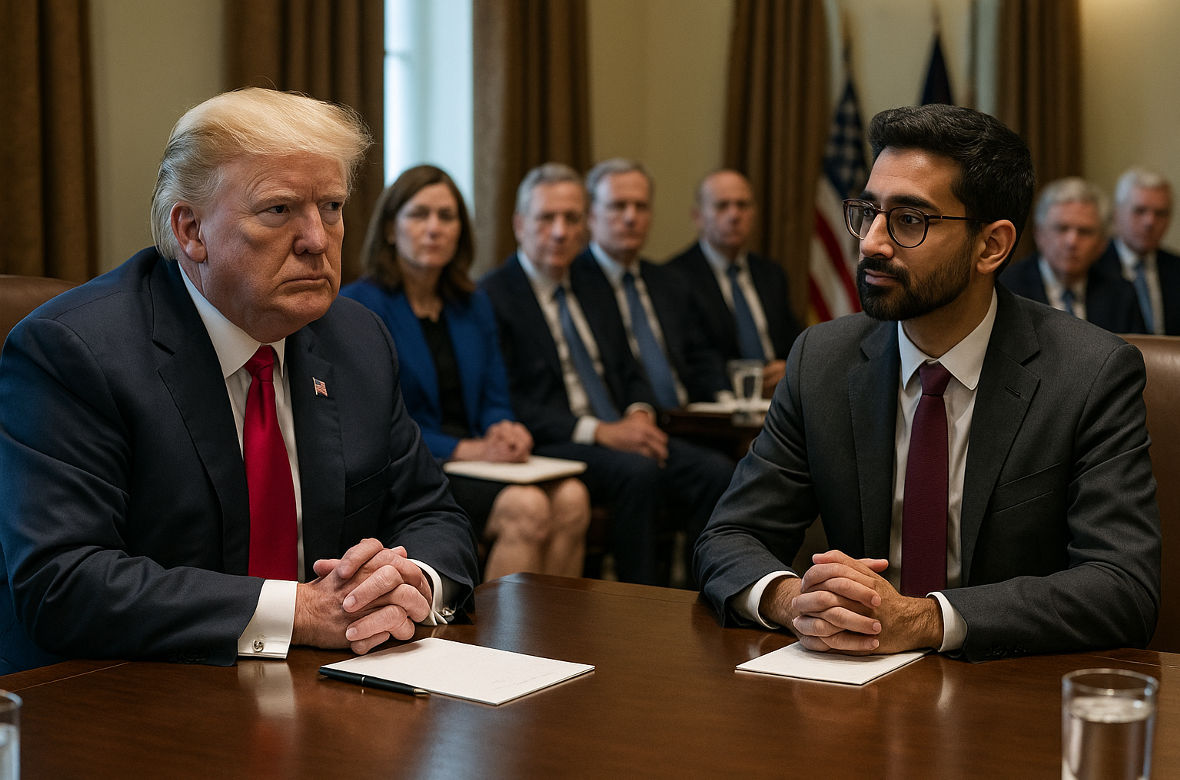
President Donald Trump and New York City Mayor-elect Zohran Mamdani met at the White House in a widely watched Oval Office encounter that surprised many observers with its cordial tone and pragmatic focus. What began as a potential flashpoint between two political figures with a history of sharp disagreements instead produced a conversation that centered on immediate concerns for New Yorkers: affordability, utility bills and public safety. 0
Setting aside rhetoric for practical problems
The meeting, which took place on November 21, 2025, lasted under an hour and was initiated by Mamdani’s team as part of his transition to city hall. Both leaders repeatedly framed the conversation as an exercise in governance rather than partisan combat. Reporters at the scene described polite exchanges and concrete talk about how federal, state and city actors might coordinate to ease the cost pressures facing households across the five boroughs. 1
Affordability and utility bills at the top of the agenda
A central outcome of the meeting was a shared focus on energy costs — specifically Con Edison’s rate structure. Trump and Mamdani both called attention to rising utility bills and urged a review of how rates and affordability programs affect struggling families. The President said officials would need to speak with the utility over its pricing, and Mamdani emphasized the need for immediate relief for households already squeezed by housing and food costs. Coverage of the exchange noted both leaders urged Con Edison to consider lowering rates or expanding consumer assistance measures. 2
This emphasis on utilities reflects a broader political reality: while many policy disagreements persist between the two men, pocketbook issues like electricity bills and rent cut across partisan lines and can create an opening for short-term cooperation. Both sides signaled interest in follow-up discussions that could involve regulators, the utility itself and congressional or executive tools to support affordability programs. 3
Public safety, services and the limits of agreement
Public safety was another important theme. Mamdani underscored a holistic approach — combining targeted policing with investments in mental health, youth programs and community services — while Trump emphasized the need to tackle crime and restore public confidence. The two framed safety as a shared priority but made no sweeping policy commitments on the spot, reflecting the political and technical complexities involved. Analysts cautioned that agreement on tone does not erase deep policy differences that will surface in areas such as immigration, federal funding priorities and national-level decisions that affect the city. 4
Observers have also noted that the meeting’s friendly optics may be as important as any immediate policy follow-through: a calm, constructive encounter between the President and a mayor-elect with sharply different viewpoints may lower temperatures temporarily and create space for negotiations on targeted city needs. Still, experts warn that a single Oval Office meeting is not a substitute for sustained policy work and oversight. 5
What to watch next
There are several concrete follow-ups to watch in the coming weeks. First, whether Con Edison or state regulators announce any review, rate relief, expanded subsidies or one-off assistance programs after discussions with federal and city officials. Second, any joint statements or memoranda of understanding that specify how federal dollars or regulatory tools might be used to support housing, transportation or energy affordability initiatives. Third, how Mamdani balances his progressive priorities with the practical need to secure federal cooperation — a balancing act that will shape his early months in office. 6
For New Yorkers, the immediate measure of success will be tangible relief in monthly budgets: smaller utility bills, clearer consumer protections and targeted investments that reduce day-to-day costs. For political observers, the meeting will be a test of whether a wary but cooperative start can turn into lasting, results-oriented collaboration or whether it remains a brief moment of goodwill before entrenched disagreements reassert themselves. 7
Ultimately, the White House meeting between Trump and Mamdani offered a reminder that local problems often require cross-partisan attention and that political adversaries sometimes find common ground when the stakes are the livelihoods of ordinary residents. Whether that common ground produces concrete policy changes will depend on follow-through from utilities, regulators and elected officials at every level — and on the political will to turn cordial words into measurable relief for the people who need it most. 8
“`9