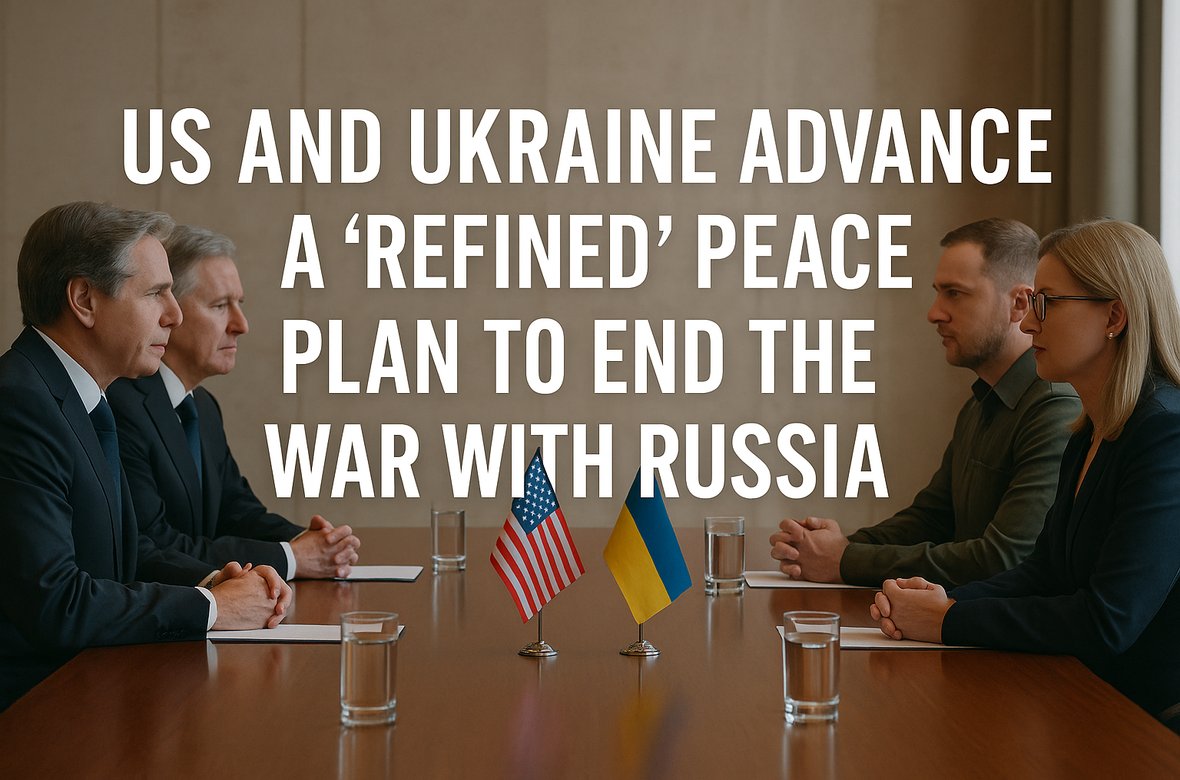
The United States and Ukraine announced that they are continuing to finalize a more “refined and updated” peace framework aimed at ending the ongoing war with Russia. The renewed push comes after the earlier U.S. proposal sparked concerns for being too favorable to key Russian demands.
Why This Matters for American Businesses and Leaders
For American executives and corporate strategists, the progress toward a more balanced peace plan carries major implications:
1.
Global supply chain stability – A viable path to peace would help reduce volatility in grain, energy, and raw-material markets that heavily impact U.S. businesses.
2.
Investment climate and reconstruction potential – A stable Ukraine opens the door for long-term reconstruction projects that American companies could participate in, including energy, infrastructure, technology, and agriculture.
3.
Risk and scenario planning – As the refined framework evolves, U.S. companies should stay prepared for both positive and negative outcomes and adjust their geopolitical risk strategies accordingly.
Main Points of the Updated Peace Framework
Key elements from the U.S.-Ukraine negotiations include:
- The Geneva meeting produced a more detailed and updated version of the peace framework.
- Both sides reaffirmed that any agreement must protect Ukraine’s sovereignty and territorial integrity.
- The U.S. and Ukraine agreed to maintain close communication and continue joint work on the final structure of the plan.
- The previous draft raised concerns because it reportedly included limits on Ukraine’s military and territorial concessions — issues Kyiv strongly opposed.
What This Means for American Companies
The evolving peace plan creates both opportunities and risks for U.S. companies:
- Opportunity for reconstruction investments – If peace progresses, American firms in construction, defense, tech, agriculture, and energy could find major new markets in Ukraine’s rebuilding phase.
- Lower international market volatility – Reduced conflict risk typically helps stabilize oil, gas, and food prices, supporting better long-term planning for American businesses.
- Improved trade routes – Restored Black Sea shipping and stable European corridors will support smoother and cheaper global logistics.
- Reputation and compliance factors – Companies must remain mindful of sanctions, transparency rules, and human-rights considerations when working in post-war zones.
What to Watch Next
Over the coming weeks, American executives should focus on:
- Whether Ukraine and the United States reach agreement on a final version of the framework.
- How Russia responds to the refined document and whether it rejects key elements.
- Europe’s reaction — especially from countries that criticized the earlier draft.
- Changes in sanctions, energy flows, and agricultural export routes that may impact U.S. markets.
Conclusion
The U.S.-Ukraine push for a revised peace framework marks an important moment in global diplomacy. While the plan is not complete, it signals real movement toward reducing a conflict that has shaped global markets for years. For American businesses, preparation and strategic foresight will be essential — the post-war landscape could offer both major opportunities and shifting risks.
Tags: US Ukraine peace plan, Russia Ukraine war updates, US foreign policy, geopolitical strategy, Ukraine reconstruction