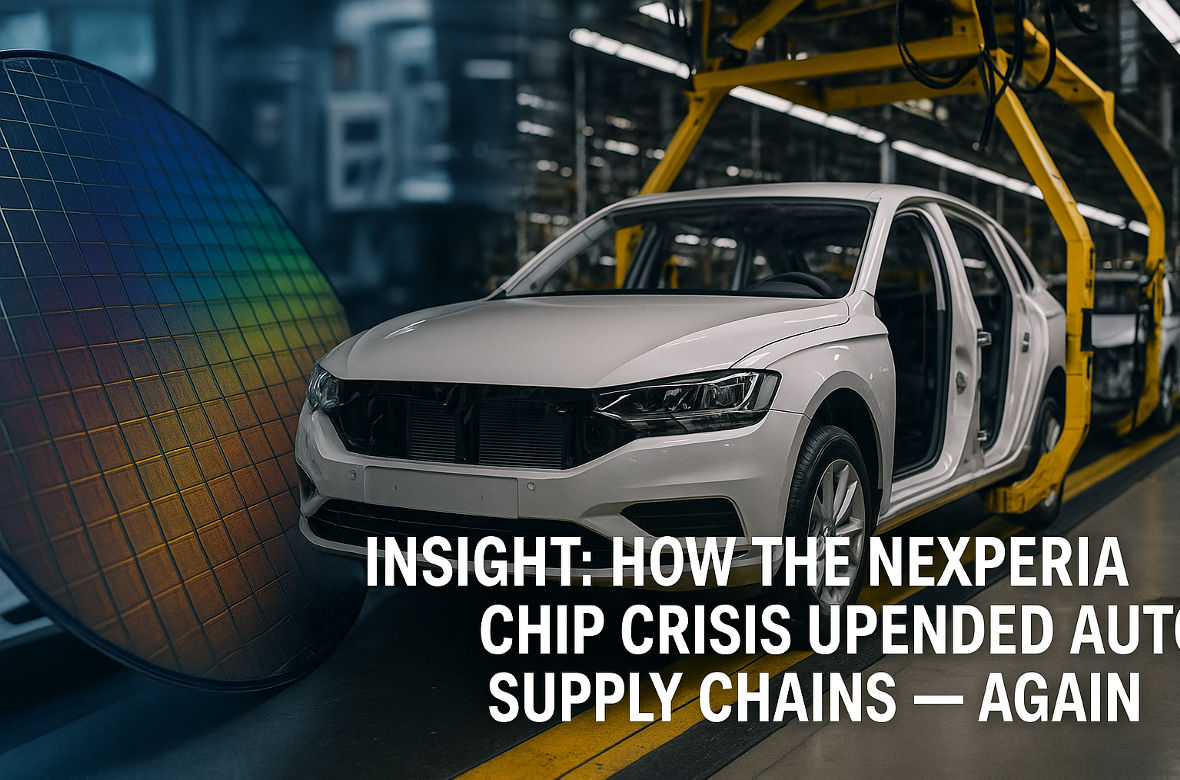
Description: The Nexperia chip shortage has once again exposed weaknesses in global automotive supply chains. This detailed analysis explains what caused the disruption, how it affected automakers, and what long-term strategies CEOs can adopt to prevent future semiconductor crises.
How the Nexperia Chip Crisis Disrupted Automotive Supply Chains
The semiconductor industry sits at the heart of modern vehicle manufacturing, and any disruption in chip supply can cause widespread delays. This is exactly what happened during the latest Nexperia chip crisis. Automakers across several countries experienced immediate production slowdowns, and many were forced to adjust their manufacturing plans. The incident once again showed how dependent the auto sector is on a stable and predictable chip supply. For industry leaders, this situation provides valuable insights into how supply chains must evolve in the coming years.
Understanding the Root of the Crisis
The shortage was triggered by sudden production constraints, shifting allocation rules, and increased global demand for specific chip types. Nexperia, which supplies many essential components used in automotive electronics, was unable to meet rising needs. When production capacity tightened, automakers faced immediate challenges. Vehicles rely on dozens of chips for power management, safety systems, infotainment, sensors, and battery modules. Even one missing component can delay an entire assembly line.
The rapid impact across factories highlighted a deeper issue: automakers rely heavily on a small number of semiconductor suppliers. Without backup options or strong inventory buffers, companies were left with no room to absorb disruptions. This dependency makes the industry extremely vulnerable to any shift in chip availability.
How the Shortage Affected Automakers
Automotive companies experienced significant production delays during the crisis. Some plants reduced working hours, while others temporarily shut down. High-demand models faced longer delivery times, and electric vehicle programs were among the most affected. Chip-intensive technologies such as driver-assistance systems, power electronics, and battery management units rely heavily on the components Nexperia provides.
The financial impact was equally important. Reduced output meant lower sales, increased logistics expenses, and rising operational costs. Several manufacturers had to prioritize certain models over others, affecting market supply and consumer satisfaction. In competitive regions like the United States, these delays reduced dealership inventory and weakened quarterly performance indicators.
Why This Crisis Matters for CEOs
For top-level leaders, the Nexperia disruption serves as a reminder that semiconductor security is no longer a simple procurement challenge. Chips are now among the most important parts of a vehicle, and without them, automakers cannot meet production goals. CEOs must take a more active role in understanding supply risk and building long-term strategies to ensure stability.
This crisis shows that companies must be better prepared for sudden shifts in global demand, geopolitical changes, and manufacturing slowdowns. Without strategic planning, companies will continue to face unexpected delays every time a major supplier encounters a bottleneck.
Steps to Build a More Resilient Supply Chain
1. Strengthen Supplier Diversification
Relying on a single supplier for critical chips can put an entire production network at risk. Automakers should work with engineering teams to identify alternate sources for important components and qualify them ahead of time. This reduces dependency and provides flexibility when supply tightens.
2. Increase Inventory of Essential Components
Just-in-time manufacturing cannot protect companies from global semiconductor shortages. Maintaining a small but strategic inventory buffer for crucial chips can prevent production stoppages and reduce financial losses during unexpected disruptions.
3. Improve Transparency Across the Supply Chain
Real-time visibility into supplier capacity, shipping timelines, and component availability allows companies to react quickly. Digital tracking tools make it easier to forecast shortages and adjust production schedules before issues become severe.
4. Build Stronger Long-Term Partnerships
Collaborative agreements with semiconductor suppliers can secure priority access during periods of high demand. Long-term contracts, investment partnerships, and capacity reservations ensure a more stable flow of components when the market becomes unpredictable.
Looking Ahead
The Nexperia chip crisis highlights the need for a more resilient and flexible supply chain. As vehicles become more advanced and rely on an increasing number of electronic components, the importance of semiconductor stability will continue to grow. Companies that invest in strengthening their supply networks today will be better positioned to compete tomorrow.
The automotive industry cannot afford to treat chip shortages as rare events. They are a recurring challenge, and only proactive planning will allow manufacturers to minimize disruptions. By focusing on diversification, transparency, and long-term partnerships, CEOs can protect their business from future supply chain shocks and maintain consistent production even in uncertain market conditions.