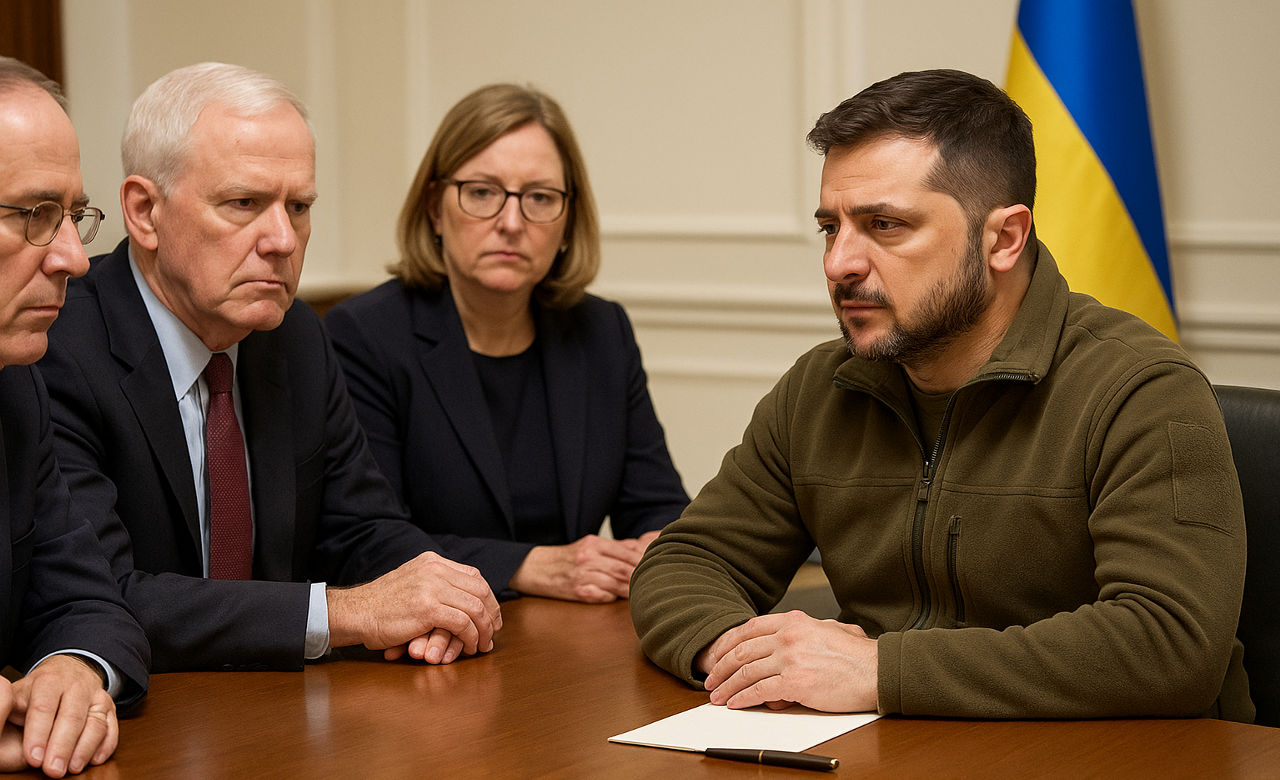
Ukrainian President Volodymyr Zelenskiy has expressed a clear willingness to examine a new US-backed peace framework, calling the upcoming discussions “honest, direct, and necessary for Ukraine’s future security.” His message signals that Kyiv is prepared to review diplomatic options, even while the conflict with Russia continues to evolve on the battlefield.
According to officials familiar with the matter, the proposal from Washington outlines several political and security steps aimed at determining whether a long-term settlement could be possible. While the details remain confidential, the framework reportedly touches on issues related to regional stability, international oversight, and potential security guarantees for Ukraine.
Zelenskiy made it clear, however, that reviewing the proposal does not mean accepting it. Instead, he emphasized that Ukraine will carefully analyze each component to ensure it aligns with the country’s sovereignty, territorial rights, and long-term defense needs.
Why the US Proposal Matters
The United States has been Ukraine’s primary strategic supporter since the start of the conflict. A peace framework coming directly from Washington carries significant weight, both politically and militarily. Kyiv sees the proposal as an opportunity to assess whether diplomatic channels could offer additional protection alongside ongoing military efforts.
Zelenskiy and his advisors believe that any step toward peace must be built on strong, verifiable commitments from Western partners. Ukraine is particularly focused on avoiding vague promises or proposals that leave room for future risks.
Europe’s Strong Pushback
While the US is pushing for deeper discussions, several European governments have responded with visible hesitation. Many officials fear that the plan—depending on its specifics—could place Ukraine under pressure to accept terms that favor Russia or disrupt Europe’s current security structure.
EU countries have stressed that long-term security arrangements in the region must not be rushed or shaped without full European involvement. Nations near Russia’s borders, in particular, worry that any imbalance in the deal could weaken NATO’s strategic posture.
Zelenskiy Balancing Diplomacy and Defense
For Ukraine, this moment is both an opportunity and a challenge. As the war stretches on, Kyiv must weigh diplomatic pathways carefully while maintaining strong ties with Western allies. Zelenskiy is now navigating a delicate political space—responding to US-led ideas without alienating European partners who play a crucial role in military and financial support.
The Ukrainian leadership has stressed repeatedly that Ukraine cannot and will not make “dangerous compromises,” particularly on territorial integrity or the strength of its armed forces. Any framework that weakens Ukraine’s defensive capabilities is seen as a non-starter.
What Comes Next
The next few weeks are expected to involve detailed talks between Ukrainian and American teams, alongside parallel consultations with European governments. Analysts believe the process will be slow, with each proposal examined through political, military, and humanitarian lenses.
Although the path is uncertain, the current dialogue marks a notable shift. For the first time in months, diplomatic options are being openly discussed at high levels. But whether this leads to progress—or deeper disagreements—will depend on how aligned Washington, Kyiv, and Europe can remain.
For now, Ukraine’s message is steady: it is ready to engage in honest work on potential solutions, but it will not accept any plan that threatens its sovereignty or security.